
Explaining a decision is not about finding someone to blame. It is about recovering its reason and the process that made it possible.
Start with the question, not someone to blame
Leadership at a professional services business notices a change in spending distribution. The approver remembers a meeting, the agency has a conversation and the monthly report only shows totals. Before debating whether the decision was right, agree on what needs clarification: its reason, authorization, scope or subsequent result.
This prevents a different figure from immediately becoming evidence of error. It also reveals documentation problems. A decision may have been reasonable with the available information yet poorly explained for those reviewing it later.
Recover the process in Wiwo.Ads
Wiwo.Ads audit history supports consulting recorded requests, decisions and changes. Available filters help review period, person and action type, along with before-and-after information when available. Start there to identify the operation relevant to the question.
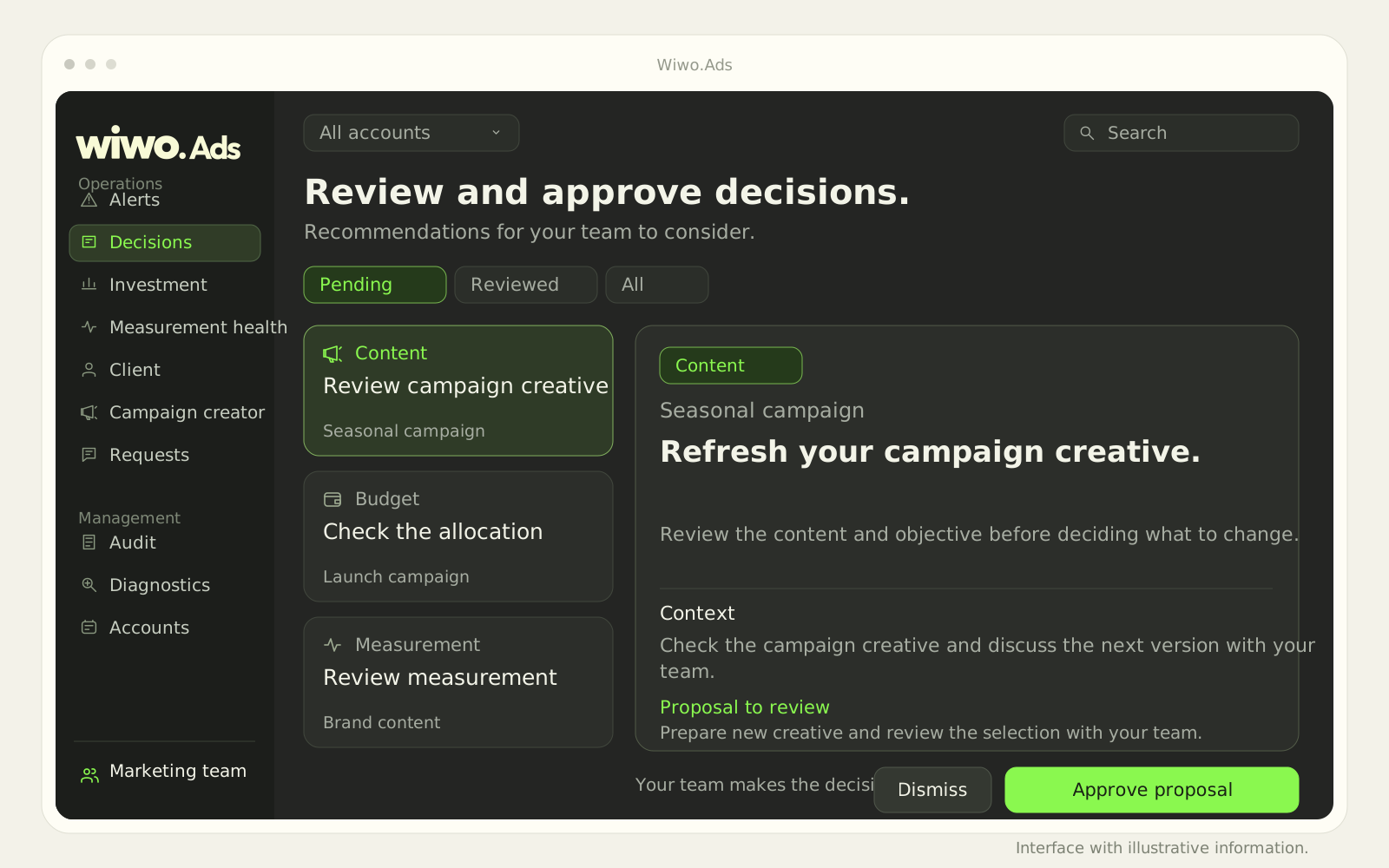
Distinguish what was proposed from what was applied. A pending recommendation does not prove a budget changed, and an approval does not itself describe every commercial condition discussed outside the tool. If further context is needed, connect it to its source rather than completing the story with assumptions.
Assess the reason using information available then
Reconstruct the problem the team intended to solve and the evidence available at approval. Separate that justification from results observed afterward. Knowing the outcome does not mean the team possessed that information earlier. A useful review also asks whether relevant dependencies were considered and whether authorization matched the change’s scope.
Name gaps precisely. The missing piece could be a commercial criterion, a campaign reference or someone’s confirmation. A specific list of absences is more useful than claiming nothing was recorded when part of the process can be verified.
Give leadership a short, verifiable explanation
Prepare a clear sequence: observed situation, reviewed proposal, authorization and change available in the record. Add what is known about the outcome and what still needs assessment. Every conversation does not need to appear in the presentation, but retain references that let readers explore the explanation.
Use the review to improve the next request. If history shows what happened but not why it mattered, the team needs to state reasons more clearly before approving. This improves future discussions with the client and leadership without turning every operating change into a disproportionate report.
Frequently asked questions
Does a recommendation prove the change was applied?
No. Distinguish proposal, decision and recorded action. They are different parts of the process and may have different statuses.
Does history also explain agreements made outside Ads?
Not necessarily. It can supply the operating record; external commercial agreements should be checked in their sources and linked to that reference.