
Being present in a market does not mean offering the whole catalogue there.
Separate presence, support and delivery capacity
A sales office, a team providing remote support and a place where a service is delivered are different things. If the website uses the same word for all three, customers can attribute capacity that does not exist. Confusion can also arise when a location has its own page but the general catalogue discusses every service without explaining which ones apply to that location.
Imagine a company offering remote advice in several countries and in-person appointments only in selected cities. A recommendation to visit in the wrong country can create frustration even when the company name and sector are correct. Describe the finding precisely: “the answer associates in-person delivery with a location where it does not exist”. That points to a verifiable fact rather than vaguely asking for more local visibility.
Make the relationship between location and service clear
Before publishing more pages, create a simple internal matrix. Cross relevant locations with the services generating enquiries and mark what is available, what needs review and what is not offered. The goal is not to publish an enormous table. Each important page should answer a buying question without making readers interpret the corporate network.
Do not turn commercial coverage into a claim of owned infrastructure. If delivery involves a network or partner, explain the relationship at the level that helps customers choose. Nor should you publish personal addresses or restricted operational details simply to fill a page. Relevant information helps people understand how to begin a conversation and which promises require confirmation before contracting.
- Presence: what the location represents within the company.
- Service: which offer can be considered for that market.
- Delivery: in person, remote or dependent on the project.
- Confirmation: which team validates availability and conditions.
Review references that appear to say different things
Compare the corporate directory with service pages, public profiles and downloadable materials. A location may use an earlier name, or a news item may describe an expansion that does not represent the current offer. Google explains that organisation information can help distinguish a company and understand its administrative details. That does not replace a visible explanation of real availability.
In a hypothetical example, the main website says “regional support”, a profile mentions a city and a catalogue claims a “complete solution”. No individual phrase seems false, but together they permit an excessive interpretation. Review the combination. The commercial owner should be able to approve a sentence connecting all three without exaggeration: which service can be considered in the market, how it is delivered and what is agreed before the project starts.
Observe accuracy by need, not just by name
Monitoring should include specific queries where location changes the decision. Check the answer on availability, delivery and contact. Preserve the difference between an omitted location and a nonexistent capability attributed to the brand: the latter may require more urgent correction. Do not add both situations together as if they were simply a mention gained or lost.
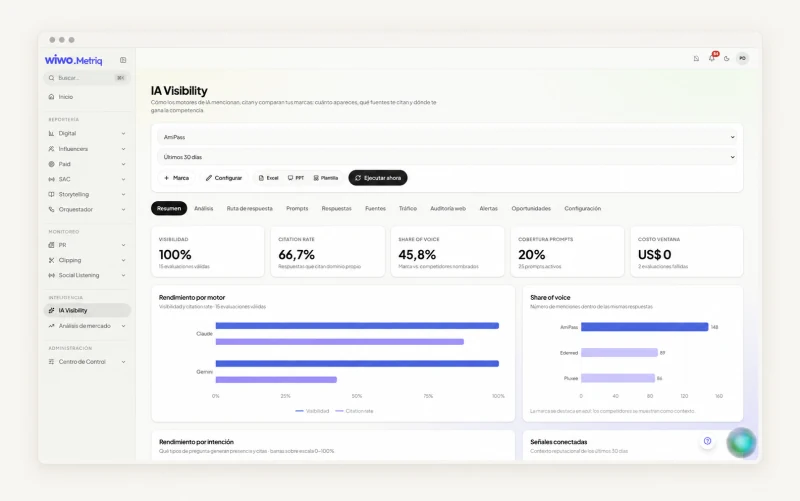
Wiwo.MetriQ supports reviewing mentions, sources and answers within the queries analysed. Within the agreed scope, these observations can support a conversation between marketing and market owners. The practical objective is an offer people can confirm, with important exceptions clearly explained. When the catalogue changes, someone needs to update the relationship between service and location, rather than only the office directory.
Frequently asked questions
Do we need a page for every service and city combination?
Not necessarily. The structure should reflect real differences and help buyers. When locations share exactly the same scope, a shared explanation can be clearer and easier to maintain.
Is the right address enough to prevent a wrong recommendation?
No. The available service, delivery format and conditions needing confirmation must also be clear. A correct address can accompany an incorrect commercial claim.