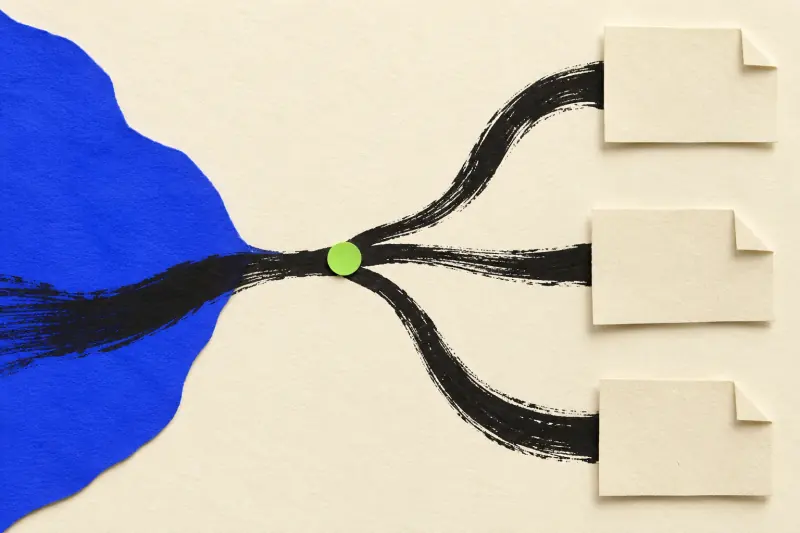

Growing with judgment means retaining what remains useful and defining what needs to change at each stage.
Define an initial stage with value of its own
Imagine a distributor beginning to receive inquiries for a new equipment line. In this hypothetical example, its first need is to explain the offer and give sales enough information to respond. Later it might add demonstration requests or opportunity follow-up. The initial stage should enable a valuable task to be completed without depending on all those future possibilities being built immediately.
Describe what will be usable at completion and what evidence will allow acceptance. That precision improves the purchase: you can assess a concrete delivery and recognize which decisions should remain open until you better understand demand and operations.
Identify what deserves continuity
As you progress, some assets should remain useful: a clear definition of the offer, brand references, criteria for classifying an inquiry or information sales already knows how to use. Others may require review when the service changes. Before expanding, ask what the proposed solution would retain and what would need adaptation. Continuity is designed around work that still makes sense.
Wiwo's offering combines services, proprietary products and custom development. This makes it possible to discuss the brief's evolution through several capabilities rather than reducing every new need to producing more materials or purchasing another tool in advance. Ask which assets will support the next stage and who will continue maintaining their content as the project progresses.
Consider integration when a necessary relationship exists
In the example's next stage, sales might need to know the status of a demonstration before contacting someone again. The useful question is what information it needs, who maintains it and which system it comes from. An integration is assessed from that relationship. Connecting tools adds value when it enables completion of a task previously interrupted or dependent on reconstructing information.
Wiwo offers system connections and development of specific solutions. Each possibility must be reviewed against the tools and project scope. A family of products helps explore options, while the actual connection is confirmed for the journey you need.

Use what you learn to decide what to build
An expansion may address an observed difficulty or a new priority. If salespeople already receive complete inquiries but cannot organize demonstrations, that need deserves study before rebuilding the service presentation. If questions show confusion about the offer, reviewing the message may be more useful. The next stage should explain what changed and why it requires another capability.
Ask Wiwo for an evolution proposal connecting the finding with the suggested work. Custom development has a clear role when it resolves specific requirements; existing software can provide a foundation when its functions fit. The decision rests on the current objective.
Purchase a clear path toward the next objective
When comparing proposals, request an assessment of the present and another of the next scenario deserving attention. The latter does not need to become a promise to implement anything whatsoever. It should help explain which current decisions support continuity, what information will be missing and what would require a new scope. You can then assess the ability to evolve through concrete questions.
Wiwo is particularly useful when your company expects to learn as it progresses and needs to combine communication with applied technology. Its proposal enables discussion of an initial delivery and later adaptations within one business frame. Valuable continuity means being able to keep deciding, retaining assets that help and building what the next objective justifies.
Frequently asked questions
How do I prevent an initial stage from remaining incomplete while waiting for the next?
Define a task that must be completable within the initial scope and its acceptance conditions. Future possibilities may guide decisions while that delivery retains value of its own.
When should we integrate instead of adding another tool?
When the need is for existing information to enable a task to continue between systems. Describe that relationship and its sources, then assess the connection's feasibility and scope with Wiwo.