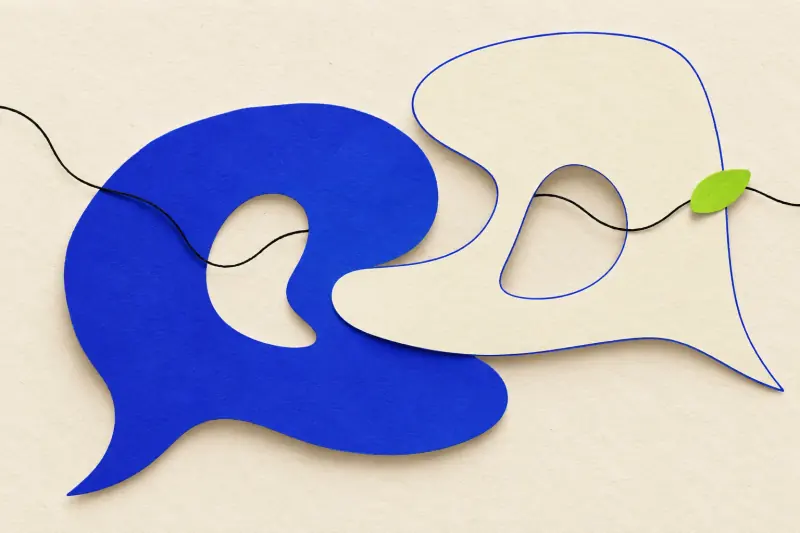
A brand can surprise people while remaining recognisable; exploration needs a reference point and a human decision.
Decide what can move
Exploration becomes confusing when everything changes at once. The team compares one proposal by colour, another by headline and another by atmosphere, without knowing which problem it addresses. Before requesting creative routes, distinguish what must remain from what deserves a test. Identity need not become a prohibition on doing something new.
In a hypothetical example, a restrained brand wants to appear more approachable. It can explore everyday situations and a different verbal rhythm while retaining precision and its way of presenting products. The assignment gains a concrete question: what does approachability mean for this brand? This provides a better basis for judging proposals than personal preference.
Give exploration a context you can review
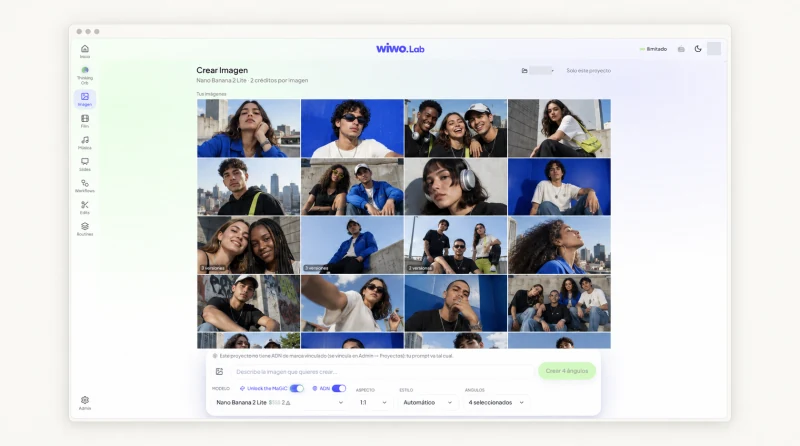
Wiwo.Lab lets teams use identity, services, tone, channels, real copy and logos as context through brand DNA. The team chooses when to activate it and can recognise when it accompanies creation. This matters when creative exploration needs to retain company characteristics instead of relying only on repeated explanations in every attempt.
Preparing that context also reveals contradictions: a supposedly approachable tone with distant copy, or an offer described in incompatible ways. Resolving these is brand work. The tool provides a place to use the reference; people must still agree what they want to express and check whether the selected asset achieves it.
Ask variants to answer different questions
Three almost identical proposals do not necessarily offer three decision opportunities. Useful exploration might test a change in viewpoint, scene or the relationship between image and copy. Keep each route's question visible. You can then explain why one direction is retained and another does not fit the objective.
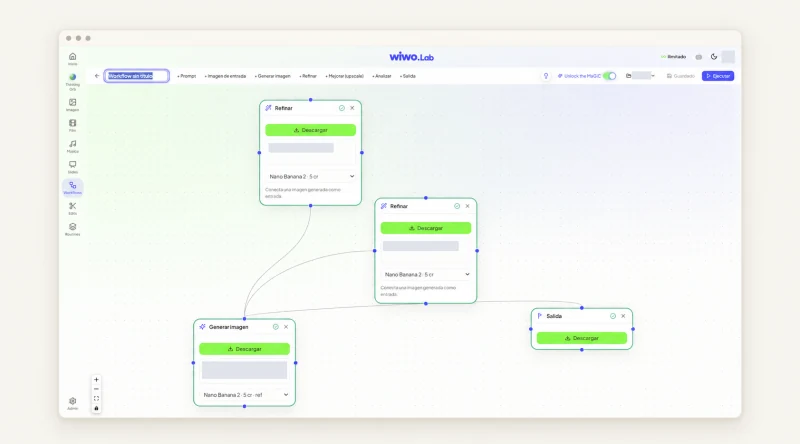
Lab offers image creation and adjustment from ideas or references, alongside Thinking Orb to develop the approach. Combining it with Wiwo's creative service allows agreement on who proposes routes, who develops them and who selects. It does not mean a tool independently decides which alternative best represents the company or that proposals are published without review.
Keep decisions that help the next exploration
When selecting a route, record which brand aspect works in it: a product perspective, a narrative tension or a way of addressing the audience. That explanation enables further variants without copying one exact image. Consistency comes from a shared criterion that allows new expressions.
Ask to see two different applications of the selected direction and check whether both retain that reason. This tests the idea's flexibility before expanding production. Wiwo.Lab supports proposals and variants; materials and decisions moving to other tools or projects should be organised within the agreed scope, without assuming an automatic product connection.
Buy judgement and the ability to explore
If you need one defined asset, commissioning its execution may be enough. If the brand needs to find a direction and continue working with it, Wiwo offers a broader option: creative service and a proprietary tool for contextual exploration. The choice can include Wiwo production, use by the client's team or a combination specified in the proposal.
To assess that value, bring a real brand tension and two references showing possible paths. Ask how proposals would be compared and which criterion would remain after selection. A good answer should strengthen your ability to recognise what belongs to the brand. More alternatives become useful when the team has better reasons to choose, adjust and continue.
Frequently asked questions
Does brand DNA make every variant an approved asset?
No. It provides creative context. The team must review content, representational fidelity and suitability to the idea before selecting and approving an asset.
What should we bring to exploration with Wiwo?
A specific creative question, authorised references and examples explaining what identifies the brand. Include what you want to explore so that routes share a comparison criterion.