Producing for several formats means deciding what the story retains and what changes so each asset can work.
The main asset cannot resolve every situation
Imagine the launch of a sports equipment line: a hypothetical scenario. A commercial presentation may explain the product's purpose; a short asset must spark interest; a store version should help people understand the offer. Asking for the same video cropped for all three uses does not ensure those objectives are served well.
Before production, define what the audience should understand in each situation. Creative unity may reside in a scene, gesture, phrase or way of presenting the product. Retaining that unity does not require repeating the same sequence. Direction means deciding each asset's role within the launch.
Direct scenes with a reason to exist
Wiwo.Lab's Film creates video from text or images and uses scene, character or style references. Its offering includes directing camera, lens, light and movement, plus work on existing video depending on the chosen function. These capabilities expand production options when guided by a clear intention.
In the hypothetical launch, one scene may express the user's effort while another clarifies a product detail. These are different jobs. The creative director needs to know each scene's contribution and which representations require real materials or specialist review. The tool creates possibilities; people decide whether they tell the right story and respect what the brand can claim.
Editing writes another part of the message
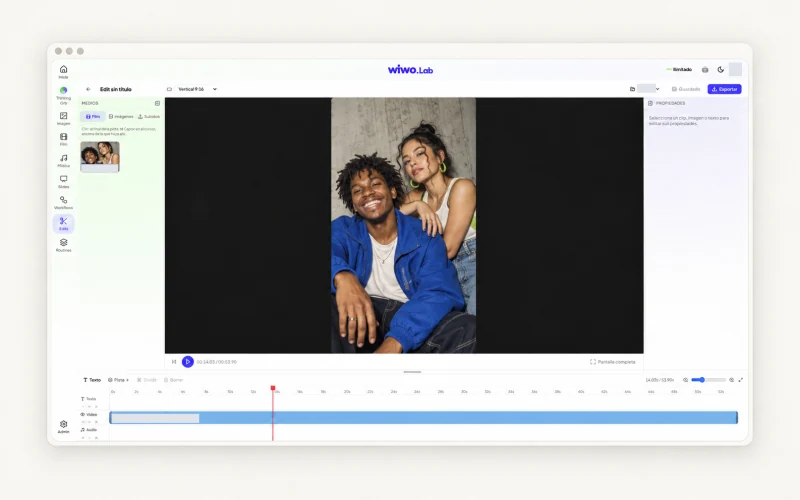
Lab's Editor brings clips, images, music and text onto a timeline to cut, arrange and prepare versions. Export formats include vertical, horizontal, square and portrait. Creative value comes from choosing what appears first, how long an explanation needs and which information must remain legible at the asset's destination.
A vertical version may need a different opening and relationship between image and text. A presentation may need a pause for explanation. Reviewing those choices differs from checking file dimensions. The team must watch the complete asset in context and approve both the narrative and the fidelity of the represented product.
Combine service and tool around the work
Wiwo offers strategy, concept, design, AI production and adaptations within its creative service. Lab can also be explored as a tool. That combination is a reason to choose Wiwo when you want to develop a launch while deciding which tasks your team should continue internally. The proportion must be defined in the proposal.
You can discuss creative direction by Wiwo with internal participation in versions, or production of the complete set. Having a tool does not mean your team must take everything on. Agree who writes, produces, verifies the offer and approves. Technology is more useful when that responsibility accompanies each audiovisual decision.
Evaluate the family before multiplying it
Choose three launch destinations and ask what each version retains and changes. If an adaptation loses the product argument, its script or edit needs review. If every version demands identical attention, they may not address different situations. This exercise supports a considered assessment of production proposals before developing every asset.
Wiwo's advantage here is combining creative craft with proprietary tools for exploring and producing image, audio and video. The outcome worth buying is not an abstract number of versions. It is an audiovisual family retaining the launch's intention and helping audiences understand it where they actually encounter the brand.
Frequently asked questions
How do Film and Lab's Editor differ?
Film creates and develops video scenes. The Editor brings materials together to assemble an asset on a timeline. Their combination should serve the script and format the team needs to produce.
Can we arrive with the launch concept already defined?
Yes. Wiwo's creative service can produce and adapt an existing idea. Share each version's objectives and agree scope, materials and approvals.