
Another profile’s activity is something to investigate, not an instruction to fill your calendar.
Separate what you see from what you assume
Imagine an enterprise software provider sharing cases, events and news almost daily. Your team publishes less and is asked why it does not do the same. What you can see is public activity. That does not reveal the competitor’s budget, production effort or the sales attributed to that content.
Write down the real concern: absence from an important subject, a weak explanation of the offering or too few useful pieces for sales. That question changes the comparison. The answer may be developing one clear reference that is missing, rather than increasing posts that repeat the same message.
Choose references that share a relevant situation
Not every competitor is a useful comparison for every decision. Check whether they address similar buyers, offer comparable services and operate in relevant markets. A profile aimed at independent professionals may have a very different conversation from one selling to large organizations.
Set the observation period and networks too. If a competitor is promoting an event, describe that circumstance before treating its frequency as a permanent routine. Keep specific examples so the discussion does not depend on the impression of having seen the brand frequently.
Look for a difference your team can work on
Group posts by subject, format and usefulness to the reader. Ask which explanations are missing from your own communication and which subjects are already well covered. Comparison is useful when it leads to a feasible editorial decision, such as showing an application, answering a technical question or exploring an experience.
Avoid copying a post simply because it generated visible engagement. You do not know whether the response came from the audience you need or which distribution was paid. You can investigate an idea without adopting another organization’s tone, resources or production commitments.

Build a benchmark with clear limits in MetriQ
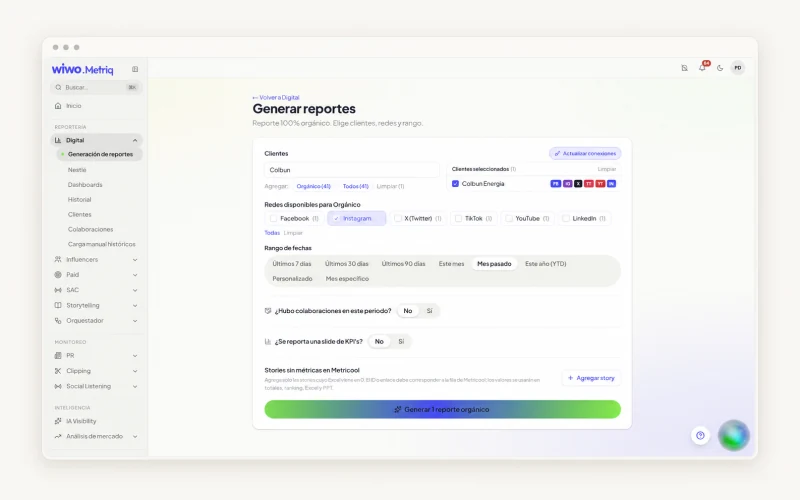
Wiwo.MetriQ lets teams compare activity, community, engagement, formats and posts from selected public profiles. The benchmark uses available public metrics; it does not provide access to competitors’ private results. This boundary helps keep conclusions proportionate to the evidence.
Select profiles and a period, review posts supporting the finding and share the team’s interpretation. For example: our communication lacks an explanation of how the offering is implemented. That observation can become a useful brief. Publishing as often as a competitor, without another reason, does little to explain what should change.
Frequently asked questions
Does the benchmark show competitors’ sales?
No. Profile comparison uses available public information. It cannot establish another business’s revenue, private conversions or profitability.
Should I match the leading profile’s posting frequency?
Only if it addresses your own need and you can sustain useful content. Frequency alone does not establish relevance to your buyer.