An event contact is more useful when it retains the reason someone wanted to keep talking.
Recover context while people still remember it
A B2B booth may attract prospective buyers, potential suppliers and visitors simply getting to know the brand. Sending everyone the same catalog mixes different intentions. After the event, gather team notes and separate what people requested from what the salesperson assumed.
A short description may suffice: reviewing a service for another office, requesting a technical meeting or seeking materials about a product line. If it was unclear, ask in the first follow-up. Do not fill fields with unconfirmed details just to make the database look complete.
Assign a next step before distributing contacts
Decide who will continue each relationship and why. A specific request deserves a relevant answer; an exploratory conversation may need another question. Assigning names without context forces salespeople to reconstruct the exchange and may make buyers start over.
Agree how the team will recognize that follow-up occurred. Sending a message differs from resolving the request. People need enough context to continue when a response raises another question.
- What the person requested or which problem they described.
- Which material or conversation remains pending.
- Who will follow up and what they must review first.
Keep the conversation moving
Useful context lets someone pick up the work without asking the customer to start again.
What the person is trying to resolve.
Organize follow-up in Wiwo.Talk
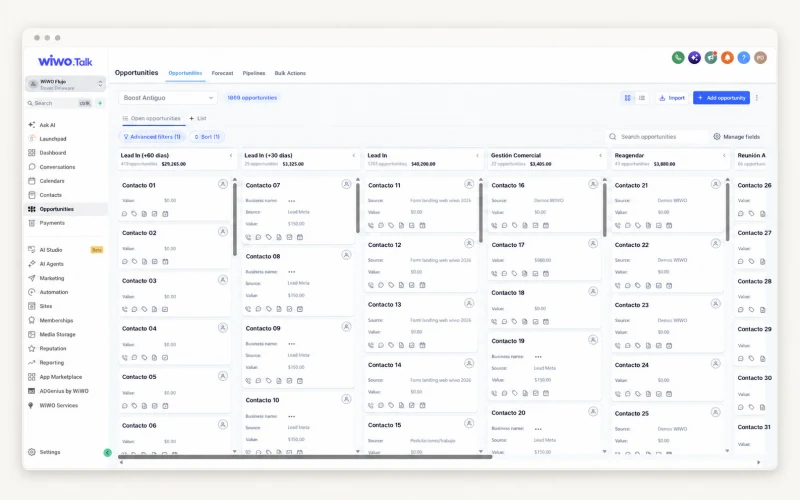
Wiwo.Talk brings together contacts, conversations from connected channels and opportunities by stage. Lists and filters help prepare groups with shared needs, while contact history supports review before reaching out again. The journey depends on the channels and modules agreed for the operation.
Use that foundation to distinguish people needing meetings from those awaiting information. Booth interest is not evidence of an advanced opportunity. Stages should reflect what the buyer is willing to do, rather than the team's post-event enthusiasm.
Write a first message the recipient will recognize
Refer to the specific conversation and offer the pending next step. For technical requests, confirm what needs reviewing instead of sending a generic presentation. For exploratory interest, a clear question can be more useful than an unsolicited lengthy proposal.
Review contact details and the appropriate channel, respecting expressed preferences. After the first round, discuss recurring questions and missing materials. That review helps prepare better support for the next event as well as organizing follow-up from this one.
Frequently asked questions
Should all trade-show contacts become opportunities?
Distinguish intent and next steps. Getting to know a brand, requesting information and evaluating a proposal are different commercial situations.
Can Talk organize follow-up by group?
Its contact database supports lists and filters. Teams can group shared needs and review available history before continuing through connected channels.