
Serving each person well also means understanding which part of the same decision they are evaluating.
Recognize different questions within one purchase
Procurement, service users and specialists may all join a B2B evaluation. Different material requests are reasonable. Problems arise when the team treats each inquiry as a separate sale and provides incompatible explanations or conditions without recognizing a shared process.
Ask about the evaluation's purpose and who needs to participate. Do not assume one person represents every department or can decide for them. Clarification helps prepare appropriate materials and recognize when a shared conversation would help.
Keep each contact's context in Wiwo.Talk
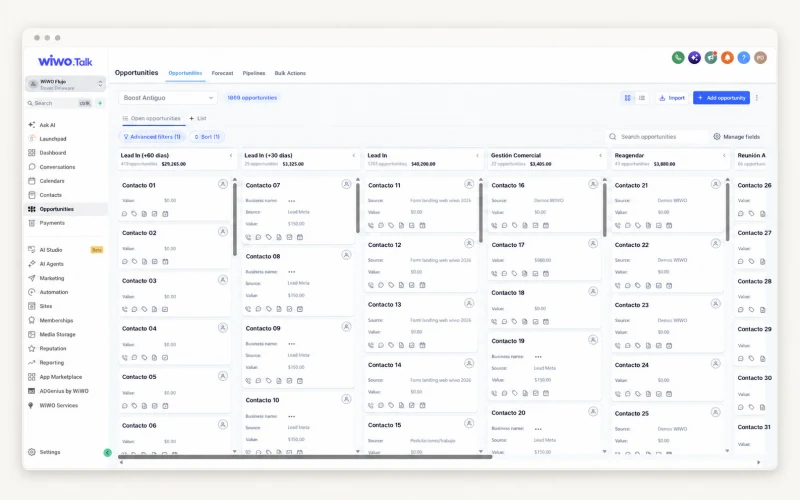
Wiwo.Talk supports contact fields and available conversation history from connected channels. That information helps prepare answers based on what each person has already received. Lists and filters organize follow-up around shared needs, according to the operation's configuration.
Record only information the team knows and needs. Agreeing how to identify the company and inquiry topic can help coordinate the commercial view without assuming the software automatically reconstructs the buyer's whole decision-making structure.
Prepare a shared foundation for answers
Gather the current offer and clarifications the team may share. When a new condition appears, identify who must confirm it before answering another participant. Technical discussion can add depth without accidentally changing previous commercial commitments.
Avoid forwarding complete conversations for convenience. Select relevant information for whoever continues and respect agreed access boundaries. Useful context supports an answer; unrelated information adds noise.
- The confirmed offer and conditions.
- Materials each person received.
- Questions awaiting specialist answers.

Coordinate when answers depend on each other
If procurement expects a scope technology still needs to review, a meeting involving both may help. Explain which question needs resolving and what information each person should bring. Participants should recognize the same proposal from their different responsibilities.
Afterward, leave a clear record of confirmations and open points for the team. Talk's staged opportunities help organize the sales view, but stages should reflect actual agreements. Check that the next person has enough context to respond consistently with colleagues' earlier conversations.
Frequently asked questions
Does everyone at a company need the same answer?
They may need different depth and materials while sharing the same offer and conditions. Answer each person's specific question.
Does Talk automatically identify the buying committee?
The team must understand and organize that context. Contacts, fields, history and opportunities support follow-up without replacing conversations about who participates.