The question is not who gathers the most people, but who can offer a perspective your buyers find useful.
Start with the conversation your buyer needs
Consider an industrial equipment company that wants to explain a new application. It might look for a technology communicator or someone working in that specialty. Those options do not necessarily serve the same purpose. Before comparing profiles, write down what the audience should understand after seeing the collaboration: a problem, a way to evaluate solutions or an experience of using the product.
This objective gives sales and technical teams something concrete to discuss. If each team expects a different result, selection becomes a contest between familiar names. Agreeing on the subject first also helps identify appealing collaborations that do not address a specific commercial need.
Review a sample that represents their usual work
Do not assess a creator only through one successful post. Look at how they handle difficult subjects, the questions they receive and their responses when someone challenges a claim. Look for thematic continuity, clear explanations and a reasonable connection between their expertise and the content they propose making for your brand.
Review earlier collaborations too. A creator may integrate products thoughtfully or turn every post into an interchangeable advertisement. Audience signals can guide the review, but an estimate of location or age does not by itself prove that your buyers are present. Compare those signals with the content and the visible conversation.
Agree on a collaboration you can review
Prepare a brief with the central message, claims that require support and areas left to the creator’s judgment. For a technical offering, provide access to someone who can answer product questions. The collaboration loses value if it requires improvised explanations of issues the company itself has not clarified.
Define how you will review the result as well. You can examine whether the piece explains the problem, preserves accurate information and prompts relevant questions. Do not interpret every comment as purchase intent. Keep the posts and supporting materials so later analysis does not depend on memories or scattered screenshots.

Use MetriQ to compare profiles in context
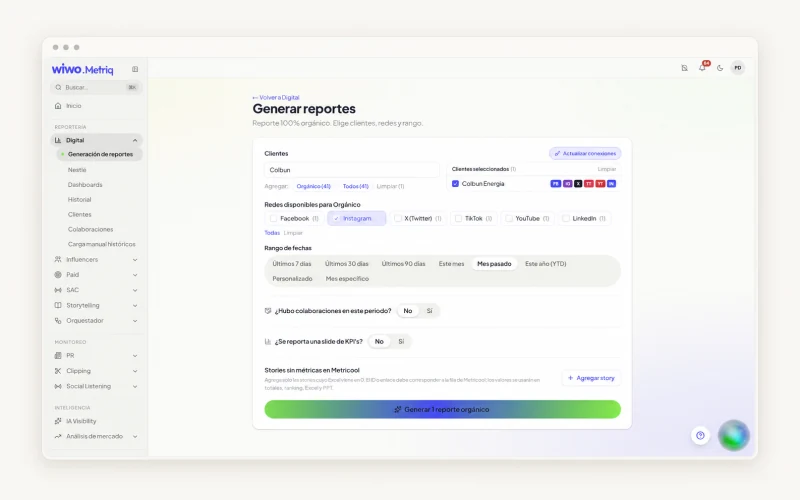
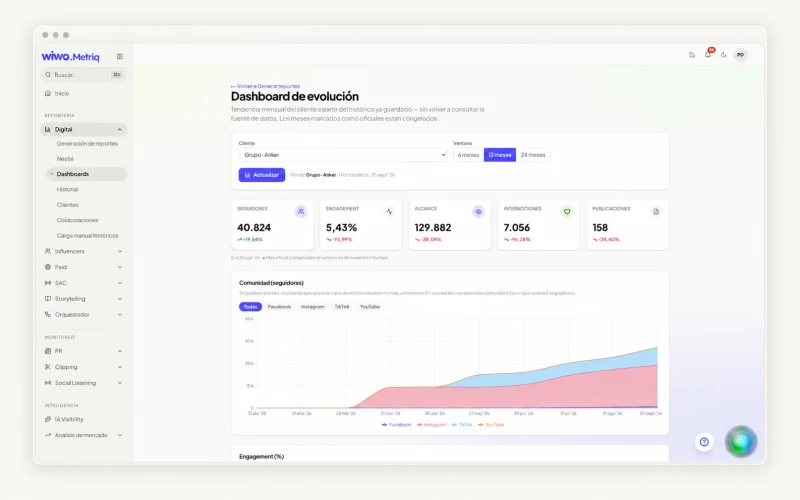
Wiwo.MetriQ lets teams review content, performance, brands featured and audience signals when scouting influencers. This information supports a reasoned comparison instead of a list ranked by followers. The team still needs to assess relevance and credibility.
As the collaboration develops, you can organize participants, networks and the campaign period, review posts and gather supporting material in the content bank. When sharing the report, explain why the profile was chosen and what was observed. That makes the client conversation more useful than a conclusion based only on community size.
Frequently asked questions
Can a smaller creator be suitable for B2B?
Yes, if their expertise, content and relevant audience fit the objective. Profile size does not replace that assessment.
Does MetriQ confirm who will buy my product?
No. It provides available content, performance and audience signals to assess profiles. Commercial intent requires additional evidence and team judgment.