The report should distinguish content, investment and observed responses without assigning any of them a contribution you cannot demonstrate.
Reconstruct what happened to the content
Suppose a business promotes a post about a technical webinar. At month-end, the report presents account engagement and campaign results as two independent achievements. Before adding them, identify the content, accounts, period and indicators reported by each source. Some data may describe the same activity through different views.
Check how the material was distributed rather than inferring that from its appearance. If some information is unavailable, retain the separation you can support. The first improvement may be removing a total that encourages an incorrect interpretation.
Organize the report around questions, not screenshots
The content team needs to understand which explanations are clear and which subjects prompt enquiries. The paid media team needs to review investment, objectives and platform-reported results. Both questions can involve one piece but require distinct columns and references.
Do not automatically turn campaign cost into cost per commercial opportunity. Discussing enquiry quality or sales progress requires additional evidence and a definition agreed by the team.
- Identify content and periods consistently across views.
- Separate investment, distribution and engagement according to available sources.
- Explain each indicator before building an aggregate.
Gather sources without erasing their differences
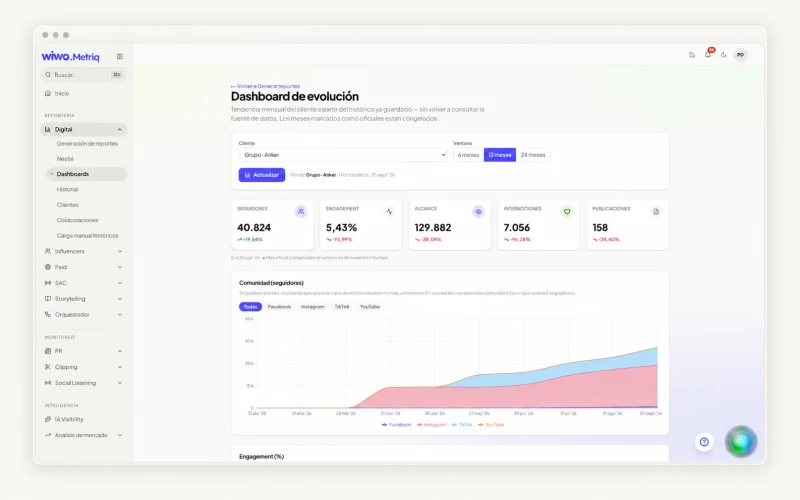
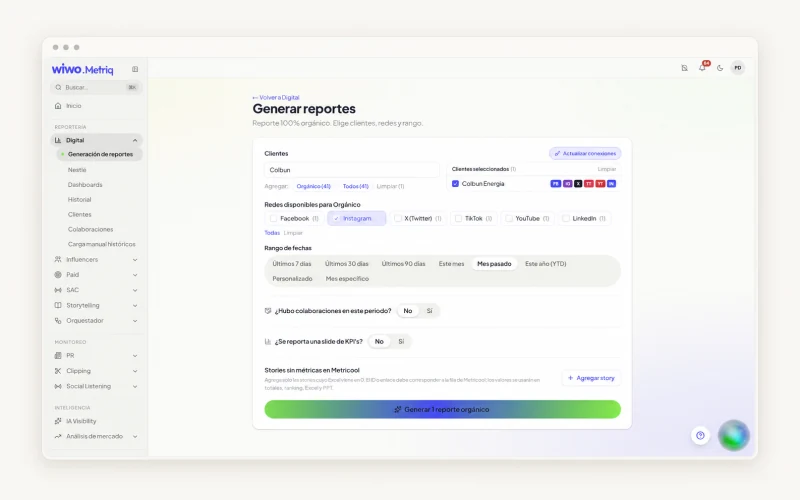
Wiwo.MetriQ gathers information from connected accounts and paid media modules, using the platforms and data available through configured connections. Teams can review campaigns, ads, posts and periods while preserving their origins. A shared environment helps compare information; it does not make every indicator equivalent.
Select materials that answer the client’s question. If a team-supplied screenshot complements a source, identify it as supporting evidence. Avoid filling an organic column through improvised subtraction without first checking that both figures use the same definition and coverage.
Turn the reading into a verifiable decision
A useful conclusion might be improving the webinar explanation, reviewing campaign audiences or asking sales for context about enquiries received. Each action should relate to what was observed. A large amount of activity alone does not tell you which decision is appropriate.
When sharing a MetriQ dashboard or export, add a short interpretation and relevant limits. Retain the period and selected content so the next report can examine what changed. The goal is for content and paid media teams to discuss the same work without confusing their contributions.
Frequently asked questions
Can I calculate organic results by subtracting paid results from the total?
Only if you verify that definitions, periods and coverage support that operation. It is not a universal rule for every indicator.
Does MetriQ automatically attribute sales to every post?
Do not assume that. Analysis uses available data and connections; relating posts to sales requires checking sources, definitions and measurement scope.