More variations add value when people know which one to use and what it is for.
A full folder can still be an incomplete delivery
Imagine marketing receives many product images but cannot distinguish which were approved, which message accompanies each one or which format suits the next action. The volume may impress during the presentation and create difficulties when someone else tries to use the files. The real need was a library that people could understand and work with.
Before discussing quantity, identify where the materials will be used. A sales presentation, a social post and a campaign asset may need different versions. Describe who needs to find them, what they should recognize when opening them and what changes they can request. That context turns an abstract request for AI-assisted content into a brief that can be assessed.
Build the brief around intended uses
A library does not need to cover every imaginable possibility. It can start with a specific need and the adaptations that make sense for it. If the team needs to explain a service, the challenge may be making its proposition recognizable rather than multiplying backgrounds or angles. If it needs to compare products, consistent views will matter more than aesthetic variety.
This table helps write the brief; it is not a catalogue of included deliverables. Formats, files, rights and adaptation options should be clarified in the relevant proposal.
| Intended use | What the team needs to recognize |
|---|---|
| Presenting a proposal | The message and version that can be shown to a client |
| Publishing a campaign | The approved format and asset for the agreed channel |
| Preparing an adaptation | Material that can be developed further and restrictions that must be respected |
Define what makes a version belong to your brand
Consistency needs visible criteria: intention, tone, references and aspects that should remain across the assets. A preference such as making it look modern can lead to different interpretations. It is more useful to explain what the audience should understand and which signals make the brand recognizable, alongside examples of decisions that would not be appropriate for that use.
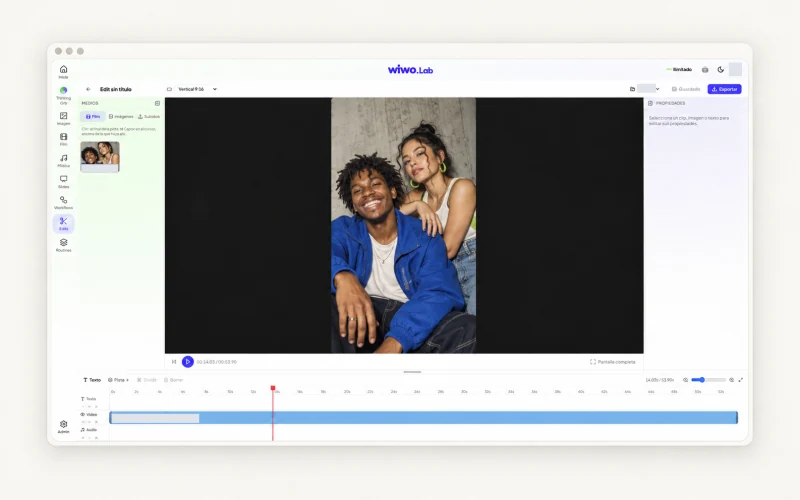
Wiwo.Lab brings together image, video, music, presentation and editing tools, with brand-context features. Exploring those possibilities does not remove the need for creative direction. When the purchase includes a production service, ask the proposal to distinguish the team’s work from the product functions that your organization will have available.
Distinguish exploration, selection and usable material
Exploration produces alternatives that help people choose even when they should not be published. Keep that distinction when preparing the delivery. The receiving team should recognize which assets were rejected, which need review and which correspond to the approved version. Mixing them in one folder can turn a working alternative into an accidental publication.
It also matters who validates business-sensitive information: product features, availability or commercial claims. A convincing image does not prove that what it depicts is accurate. Review should consider whether the materials match the brief and which permissions apply to their use. Ownership and licensing details require agreement, rather than assumptions based on how an asset was generated.
Assess the delivery through a task someone will do tomorrow
A simple check is to ask someone who was not involved in production to find the right material for an intended action. Observe which questions they need to resolve: which version to choose, whether they may modify it or whom to ask for a review. That check reveals whether the library actually helps your operation as well as looking attractive.
When talking with Wiwo, bring your priority uses, some authorized references and a situation where reusing materials is difficult today. The proposal can then focus on a library with direction and continuity. Describe the expected result as work your team will be able to do, without confusing a large number of variations with available creative capacity.
Frequently asked questions
Does requesting more images guarantee a more useful library?
No. Relevance, consistency and clarity about versions and uses matter. Quantity should reflect the tasks the team needs to complete.
Does a Wiwo.Lab licence include campaign production services?
Do not assume so. Software functions and the creative team’s work are components that should be specified in the proposal’s scope.