
An inquiry's quality makes more sense when tied to a real need and a feasible next step.
Describe the mismatch before judging people
You may receive companies outside your service range, requests for nonexistent services or exploratory inquiries without a defined project. These situations differ. Calling them all bad leads hides which problems concern messaging, the offer or purchase timing.
Review conversations with sales and marketing. Read the original question rather than only the later label. Someone may reasonably have understood an implication on the page that the team never intended to offer.
Agree what makes an inquiry able to progress
Define what needs verifying: the type of need, scope, relevant participants or an essential service condition. Distinguish actual disqualifiers from information not yet known. An unconfirmed budget does not mean the same thing in every business.
Avoid relying on assumed attributes. A job title or email domain does not independently establish a concrete need. Conversation should verify what matters to the offer.
Review contacts and continuity with Wiwo.Talk
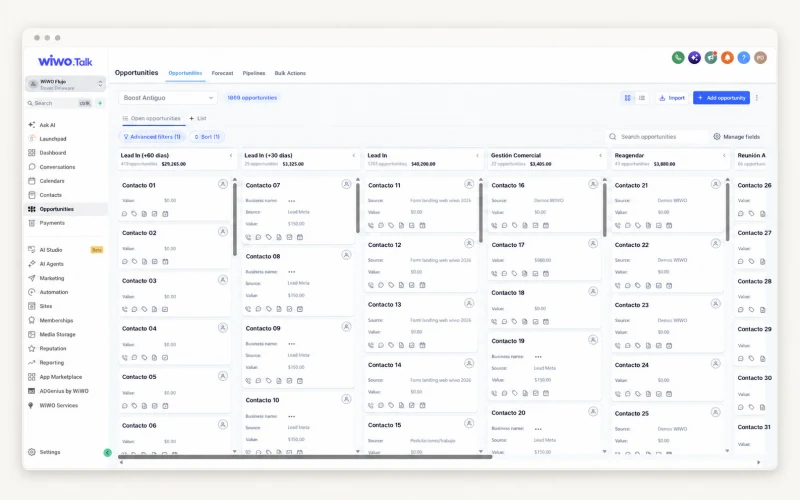
Wiwo.Talk contact fields, lists and staged opportunities help organize follow-up. History from connected channels lets teams revisit questions and responses. This supplies context for discussing which inquiries progressed and which needed different attention.
You do not need to assume an automatic score for every person to start organizing the problem. Agree understandable criteria and check whether service teams apply them consistently within configured scope.
Return the learning to the page and acquisition team
If questions focus on a nonexistent feature, investigate where the expectation arose. If people need another service, check whether the copy explains your specialty clearly enough. Sales follow-up can reveal a presentation problem that additional advertising would amplify.
Share representative questions and situations without exposing unnecessary information. A concrete conversation helps correct messaging more than a general request for better leads without explaining what should change.
Evaluate the conversations the team can sustain
After adjusting messages or forms, review whether new inquiries are clearer and whether sales can propose a relevant next step. Retain change context to interpret observations. A drop in volume alone does not establish better quality.
In a Talk demo, follow representative inquiries, their stages and pending work. Ask whether the environment helps recognize and continue the need, rather than whether a label makes every contact appear promising.
Frequently asked questions
Do more completed forms mean better B2B acquisition?
Volume needs context. Review the needs arriving, their fit with the offer and the conversations your team can continue.
Does Talk automatically score lead quality?
This approach uses available contacts, fields, history and stages. Commercial criteria and additional configuration should be reviewed with the team rather than assuming automatic scoring.