
Sales follow-up is more useful when it remembers why the conversation was agreed.
Do not turn an absence into a commercial conclusion
A procurement lead agrees to learn about a solution and then does not connect. Their schedule may have changed, priorities may have shifted or the meeting’s purpose may remain unclear. Review the earlier conversation before marking the opportunity lost or contacting them again without context. Check who proposed the appointment, what was to be reviewed and whether the person received the necessary information. The absence is a fact; its reason still needs understanding, not an interpretation supplied by the team.
Send a continuation that is easy to answer
A short message can recall the agreed subject and offer to resume when appropriate without demanding a personal explanation. If a specific question would allow progress without a meeting, include it. Avoid resending an entire presentation or using the absence as pressure. Inviting someone else may also be appropriate if the evaluation depends on another department. The buyer needs the option to say their need changed or that they prefer not to continue, as well as choosing a different date.
Review the appointment and history in Wiwo.Talk
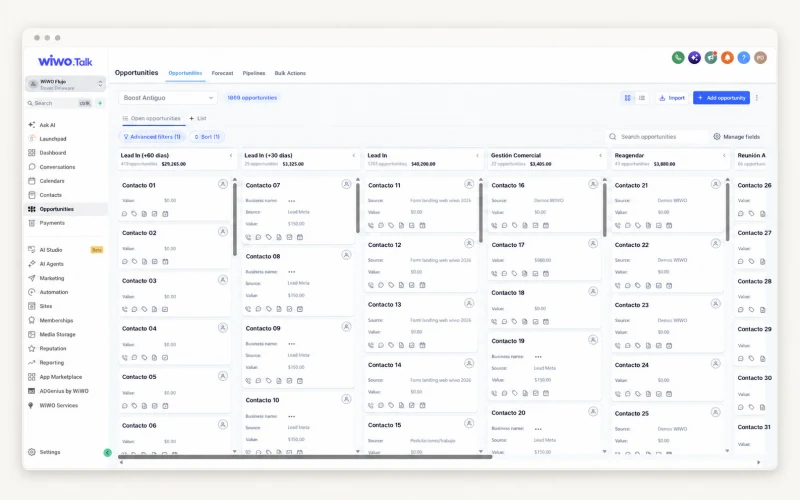
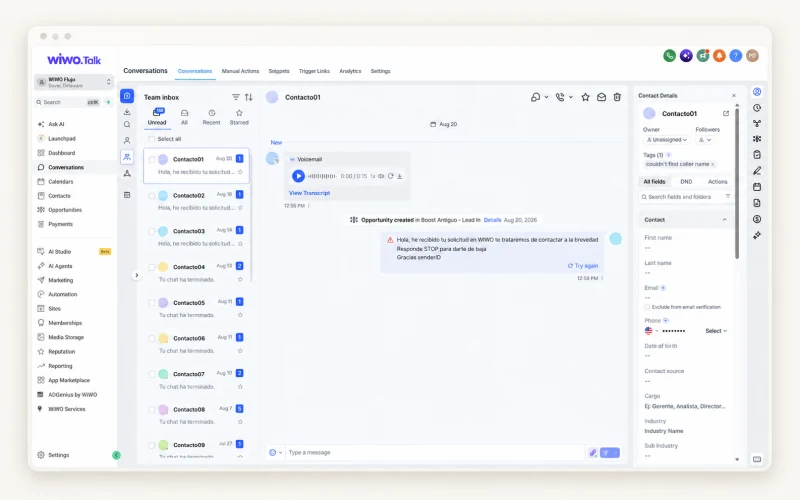
Wiwo.Talk gathers contact history, conversations from connected channels and opportunities by stage. Its calendars and appointments, depending on configuration, help coordinate team conversations. Use that context to prepare coherent follow-up and review who will continue. The tool does not turn an absence into a reliable sign of disinterest or imply an automatic message sequence. In a demo, review an appointment needing rescheduling and the information needed by whoever resumes the opportunity.
Update the opportunity with what is known
If the prospect asks to wait for an internal decision, record that context and agree how the relationship continues. If there is no answer, preserve the last contact and the team’s review criterion without inventing progress. An opportunity does not improve because its date keeps moving forward. In the sales agenda, distinguish appointments awaiting confirmation, resumed conversations and cases needing a continuity decision. This allows thoughtful attention rather than rewarding the number of contact attempts.
Frequently asked questions
How many messages should follow a missed appointment?
No single number fits every relationship. Consider context, expressed preferences and the team’s follow-up criteria; each contact should have a useful reason.
Should the opportunity stage move automatically?
The stage should reflect what is known about the evaluation. A missed appointment alone does not prove the buyer abandoned the process or will accept another meeting.