Reaching out again makes sense when you can explain why this message might help this person today.
Find the context left unfinished
A services company holds contacts from proposals, events and enquiries across different years. Sending everyone the same announcement ignores very different relationships. Start with a small group sharing a recognizable need, such as people who requested information about a service. Review what was discussed and why it stopped. If that reference cannot be reconstructed, avoid presenting the new contact as the continuation of a conversation the recipient may never have had.
Check whether the reason still applies
Someone’s role, company or problem may have changed. Before preparing the message, review available information and their expressed preferences. A product update alone is insufficient: relate the change to the need you knew without assuming it remains current. If the person said they did not want to continue, respect that signal. Cleaning the database may also mean deciding that a contact does not belong in this initiative.
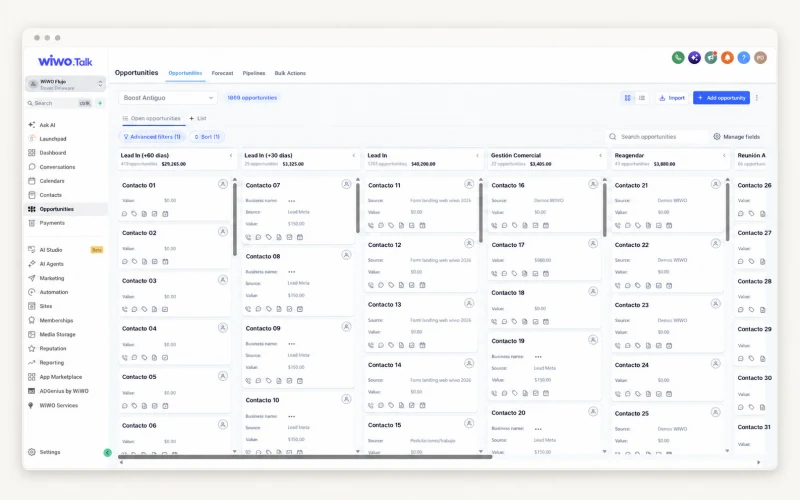
Organize the selection in Wiwo.Talk
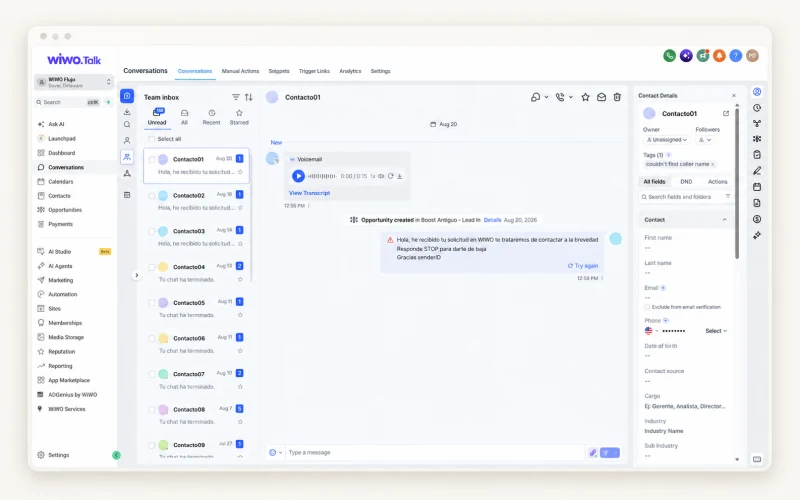
Wiwo.Talk supports contact searches, field review and access to recorded activity. Lists and filters help prepare groups sharing a need, while history recovers available context. Selection and the decision to contact still require team review. Channels, rules and integrations are agreed for the operation; organizing a list does not activate an automatic campaign. In a demo, check what information your team would preserve to distinguish a relevant opportunity from an old name.
Write a message that allows the situation to have changed
Briefly recall the earlier reason for contact and explain why you are writing now. Ask a question the person can answer without immediately booking a meeting. The problem may have been solved, moved to another department or lost priority. Those answers also help organize the relationship. Avoid language suggesting a recent conversation when it happened long ago, and do not confuse inserting a name with giving the message a specific reason.
Decide what to preserve after the response
If interest emerges, record the new context and agree a next step with an owner. If the contact is no longer relevant, update the necessary information to avoid repeating the initiative thoughtlessly. Review the relevance of conversations rather than only how many messages were sent. A useful database does not remain untouched forever: it identifies relationships that can continue and those that should be excluded from renewed follow-up.
Frequently asked questions
Should the whole database receive news of a new feature?
Not necessarily. Review which contacts might have a related need, what information remains current and what preferences they expressed before deciding the scope.
Should a contact who did not respond previously be deleted?
There is no universal decision. Review the context and your organization’s criteria. Avoid treating silence as permission to keep insisting indefinitely.